La souplesse ou la rigidité d'un film de résine textile affecte le toucher du tissu, la résistance au collage, ainsi que la capacité d'une couche d'impression à résister au frottement et à la déformation. Un film trop souple ou trop dur pour son application peut affecter le textile fini lors de sa transformation, de son stockage et de son utilisation.
« Trop souple » et « trop dur » dépendent de l'application prévue. Les impressions sur des tissus d'habillement souples et les enductions envers qui nécessitent un toucher ferme ont des exigences de film différentes.
Films trop souples : poisse, collage et usure de l'impression
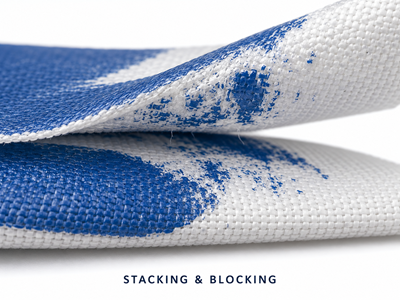
Les surfaces imprimées peuvent rester en contact pendant de longues périodes lorsque les vêtements sont pliés et emballés. Sous l'effet de températures élevées et de la pression d'empilement, un film de résine trop souple avec une forte poisse de surface peut coller à une autre surface imprimée. La séparation des surfaces peut laisser des empreintes ou endommager l'impression, entraînant des inspections et des retouches supplémentaires.
Si un liant d'impression textile forme un film trop souple avec une force de cohésion insuffisante, des frottements répétés peuvent provoquer une usure localisée, une couleur inégale ou des bords d'impression flous. Une surface poisseuse peut également attirer la poussière et les peluches, affectant l'apparence du motif.
Une résine textile souple à base d'eau nécessite donc une résistance de film et une résistance à la poisse résiduelle adéquates pour protéger l'impression tout en conservant un toucher souple.
Films trop durs : toucher de tissu rigide et craquelures lors de l'étirement
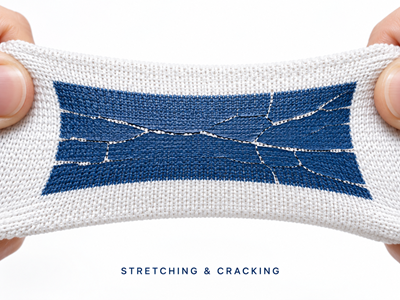
Un film de résine trop rigide peut restreindre la flexion du tissu et rendre la zone imprimée plus dure au toucher que le matériau environnant. Cela peut affecter la souplesse, le drapé et le confort au porté. La différence est souvent plus perceptible sur les tissus légers ou les grandes zones imprimées.
Sur les tissus extensibles, un film trop dur avec une élongation insuffisante peut se fissurer lorsque le tissu s'étire. Des étirements ou des pliages répétés peuvent aggraver les dommages autour de ces fissures et réduire l'intégrité de l'impression.
Les liants pour l'impression textile élastique doivent s'adapter à la déformation du tissu. Les applications de finissage textile et d'enduction envers qui nécessitent un toucher ferme ont des exigences différentes.
Dommages à l'impression après lavage : effets différents des films souples et durs
Certains clients signalent que les impressions réalisées avec leur résine textile précédente devenaient inégales après le lavage, avec des décollements localisés dans certains cas.
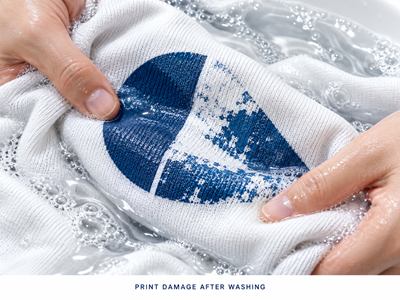
Pendant le lavage, les tissus imprimés subissent des frottements, des flexions et des tractions répétés. Un film trop souple avec une résistance insuffisante peut s'user, laissant des zones inégales ou des bords flous. Un film trop dur avec une flexibilité insuffisante peut se fissurer lors de flexions répétées. À mesure que les craquelures s'agrandissent, des sections de l'impression peuvent se détacher.
La même plainte — « l'impression devient inégale après le lavage » — peut décrire différents types de dommages. Un film trop souple peut subir des dommages par abrasion, tandis qu'un film trop dur peut se fissurer sous l'effet de la déformation. Les deux peuvent réduire l'intégrité du motif imprimé.
Quels paramètres aident à expliquer les propriétés des films de résine textile ?
La température de transition vitreuse, ou Tg, aide à indiquer la tendance d'une résine à la souplesse ou à la rigidité, mais ce n'est pas une mesure directe de la dureté du film sec. La teneur en matières solides et la viscosité de l'émulsion fournissent principalement des informations sur la formulation et le traitement. Aucune ne mesure directement la durabilité au lavage ou la résistance à la fissuration.
Le tableau suivant compare les paramètres typiques publiés pour trois émulsions acryliques à base d'eau :
|
Propriétés typiques
|
PA-511
|
PA-510
|
PA-512
|
|
Tg
|
−20
|
−16
|
20
|
|
Teneur en matières solides (%)
|
45±1
|
45±1
|
48±1
|
|
Viscosité à 25°C (cP)
|
600–1200
|
500–1000
|
200–500
|
|
Caractéristiques du film
|
Toucher souple, haute élasticité
|
Haute élasticité, film souple
|
Toucher ferme
|
PA-511 Émulsion acrylique auto-réticulable souple combine un toucher doux avec une résistance à l'adhésivité résiduelle. Émulsion acrylique à base d'eau à haute élasticité PA-510 est destinée à des applications incluant l'impression textile élastique. Émulsion acrylique auto-réticulante dure PA-512 met l'accent sur un toucher ferme, une résistance au collage et une résistance à l'abrasion. Ces produits représentent des exigences d'application différentes, plutôt qu'un classement de « trop mou », « équilibré » et « trop dur ».
La même résine d'enduction textile peut produire des résultats différents sur des tissus différents ou à des épaisseurs d'enduction différentes. Le choix de la résine doit tenir compte du substrat et de l'utilisation prévue, afin que l'impression conserve le toucher requis tout en résistant au frottement et à la déformation pendant le stockage, le lavage et l'usure.
Sinograce Chemical fournit des résines à base d'eau pour l'impression textile et les enductions textiles. Les clients sont invités à se renseigner sur les informations produits et les échantillons pour les tests.
FAQ
1. Pourquoi mon impression textile devient-elle inégale après le lavage ?
Le lavage soumet l'impression au frottement et à des flexions répétées. Un film trop mou et manquant de résistance peut s'user, laissant des zones inégales. Un film trop dur et manquant de flexibilité peut se fissurer et se briser.
2. Pourquoi les vêtements imprimés collent-ils ensemble après l'emballage ?
Un film de résine souple avec une forte adhérence de surface peut coller à une autre surface imprimée sous l'effet de la chaleur et de la pression d'empilement. Séparer les vêtements peut laisser des marques ou endommager le motif. Les impressions textiles souples ont donc besoin d'une résistance au collage adéquate.
3. Pourquoi la zone imprimée semble-t-elle rigide ou se fissure-t-elle lorsqu'elle est étirée ?
Un film trop dur peut restreindre la flexion du tissu et rendre la zone imprimée rigide. Si le film manque également d'une élongation suffisante, il peut se fissurer lorsque le tissu s'étire. Les impressions textiles élastiques ont besoin à la fois d'un toucher confortable et de la capacité de suivre le mouvement du tissu.
4. Quelle résine textile dois-je envisager pour mon application ?
PA-511 met l'accent sur un toucher doux et une résistance à l'adhésivité résiduelle. PA-510 est destiné à l'impression textile à haute élasticité. PA-512 offre un toucher plus ferme pour des applications incluant la finition textile et l'enduction envers. Confirmez la pertinence en effectuant des tests sur votre tissu.

 français
 English
 русский
 español
 العربية


